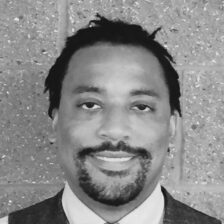
Learning chemistry through reasoning and discovery
Dr. Green’s teaching connects molecular structure with reactivity, laboratory evidence, and real-world chemical questions. Across organic and medicinal chemistry, students practice explaining why reactions occur and using evidence to evaluate their conclusions.
Courses
CHE 300 — Organic Chemistry I
Build a foundation in molecular structure, bonding, stereochemistry, and reaction mechanisms. Connect the movement of electrons with the products and selectivity of organic reactions.
CHE 302 — Organic Chemistry II
Extend mechanistic reasoning to a broader range of functional groups and transformations. Practice synthesis planning and connect spectroscopic evidence with molecular structure.
CHE 303 — Organic Chemistry Laboratory I
Develop practical skills in synthesis, purification, characterization, and laboratory safety. Learn to maintain clear records, interpret observations, and communicate experimental results.
CHE 304 — Organic Chemistry Laboratory II
Participate in a course-based undergraduate research experience (CURE) that brings authentic research questions into the teaching laboratory. Students develop proposals, review one another’s ideas, conduct experiments, and present their findings.
CHE 460 — Medicinal Chemistry
Explore relationships between chemical structure and biological activity. Connect organic chemistry with molecular recognition, drug design, and the properties that influence a compound’s behavior in biological systems.
CHE 478 — Advanced Laboratory II
Build on skills developed in CHE 477 to tackle advanced experimental problems. Topics include planning chemical procedures, multistep synthesis, advanced synthetic techniques, molecular and electronic spectroscopy, molecular modeling, and solid-state chemistry.
View the SUNY Cortland course description →
Research in the teaching laboratory
The CURE approach gives students experience with the decisions and uncertainty that are part of scientific research. Students use the literature to develop a question, design an experiment, evaluate the results, and revise their interpretation.
Projects explore modern synthetic approaches such as microwave chemistry, mechanochemistry, sonication, photochemistry, and electrochemistry, with attention to green chemistry and responsible experimental design.
Skills students develop
- Finding and evaluating chemical literature.
- Designing experiments and documenting reproducible procedures.
- Interpreting spectroscopic and experimental data.
- Giving constructive peer feedback.
- Communicating findings in reports and presentations.
Mentoring and participation
Teaching and research mentoring aim to help students become confident, independent scientific thinkers. Students are encouraged to ask questions, explain their reasoning, and contribute their perspectives to collaborative work.
For students
Consult your current course syllabus and course learning platform for assignments, deadlines, grading policies, and office hours. For course questions or to arrange a meeting, email Dr. Green with your course number and section.